A live event is no longer a single date on the calendar. As brands, universities, non-profits, and festival promoters compete for attention across physical and digital channels, the event itself has become a high-value content engine.
The challenge is that many organizations still treat event content capture as an afterthought. A camera is placed at the back of the room, a few photos are taken, and the opportunity disappears when the audience leaves.
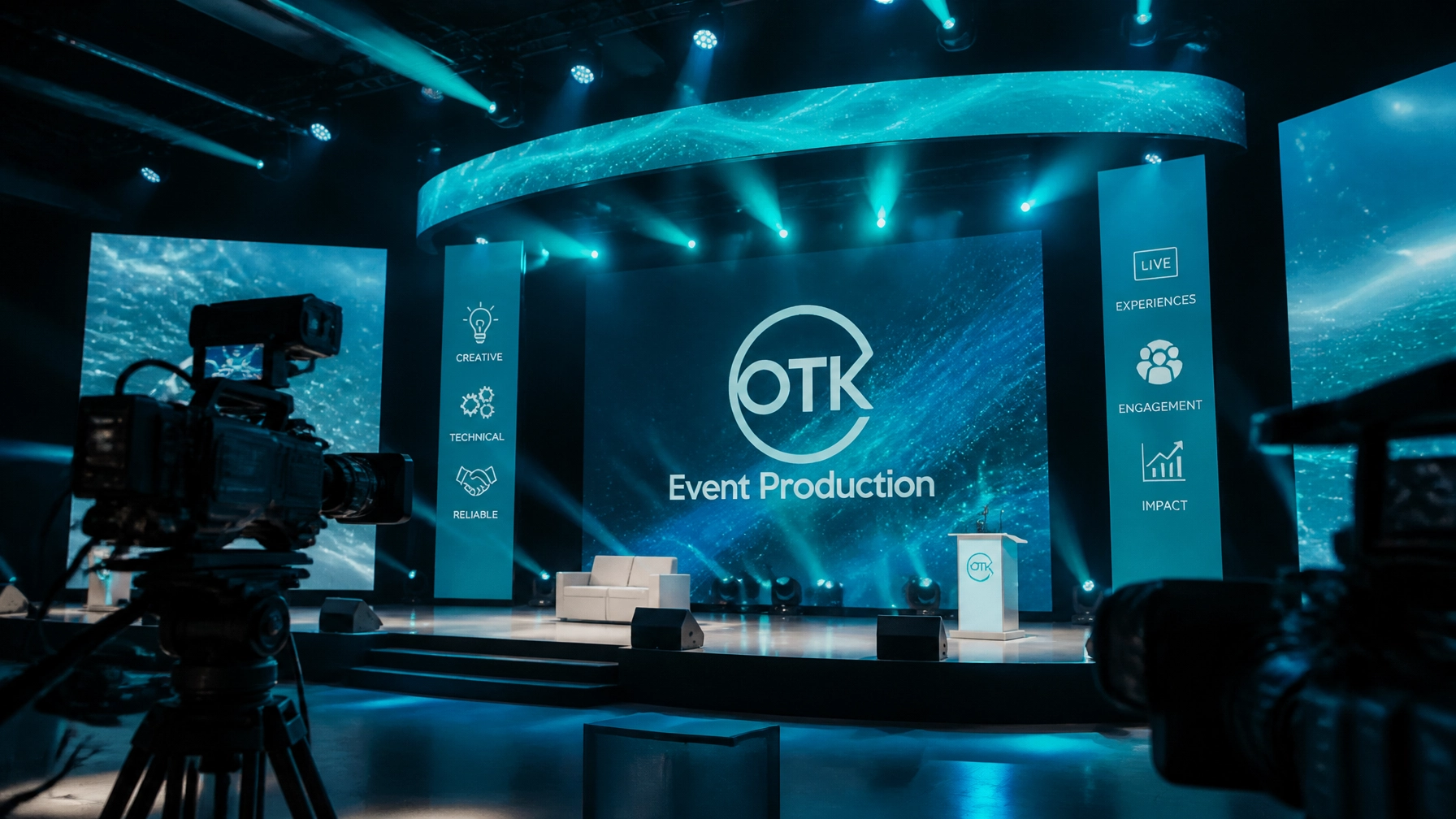
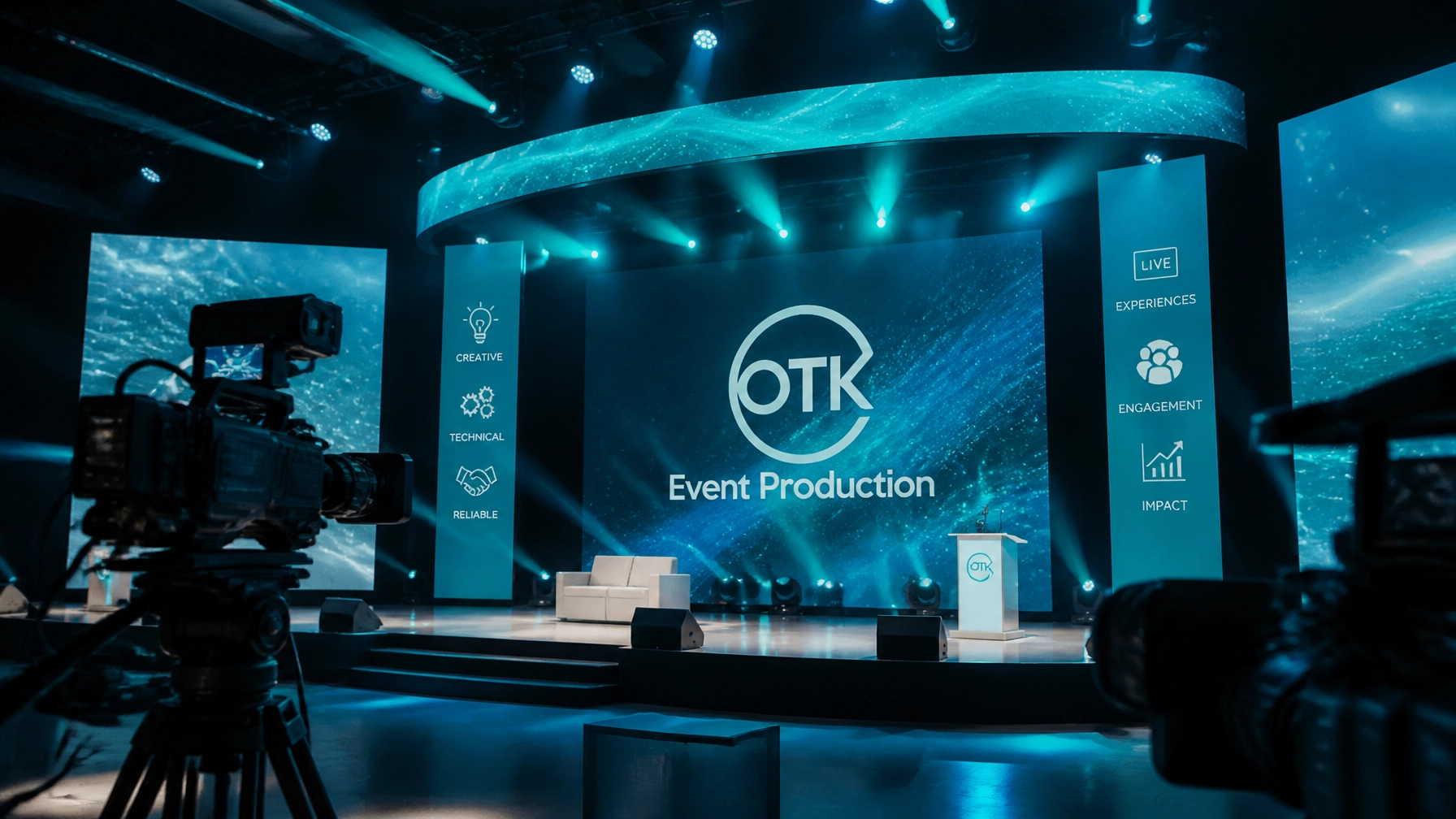
OTK Event Production takes a different approach. Through show development, creative direction, lighting design, technical management, livestreaming, staging, special FX, and content capture, the production is planned for both the live audience and the next 90 days of marketing.
The result is not simply a recording. It is a structured library of social clips, speaker content, sponsor assets, sizzle reels, stills, and on-demand programming.
The most valuable event is the one that continues working long after the final cue.
Start at Concept Stage: Build the Content Plan Before the Show
Effective event content capture begins during creative direction for events, not during load-in.
As the show concept takes shape, OTK aligns the event’s business goals with a practical content plan. The team identifies what the event needs to communicate, who needs to see it, and how each asset will be used.
That planning process typically covers:
- Primary audiences: attendees, remote viewers, customers, employees, donors, students, or sponsors
- Distribution channels: LinkedIn, Instagram, TikTok, YouTube, email, paid media, and internal communications
- Required formats: horizontal, vertical, square, captioned, subtitled, and presentation-ready
- Priority moments: keynote entrances, product reveals, awards, performances, testimonials, and crowd reactions
- Sponsor obligations: logos, booth footage, stage mentions, branded segments, and post-event deliverables
- Usage rights: speaker permissions, music licensing, attendee releases, and platform-specific requirements
This is where corporate event management and content strategy intersect. A keynote may need to become a polished long-form session. A product reveal may need a fast vertical edit within 24 hours. A sponsor activation may require its own recap package.
By deciding those requirements early, the production team can design the stage, lighting, graphics, camera positions, and run of show to support them.
Content capture performs best when it is engineered into the experience, not added after it.
Design the Room for the Camera: Every Angle Should Have a Purpose
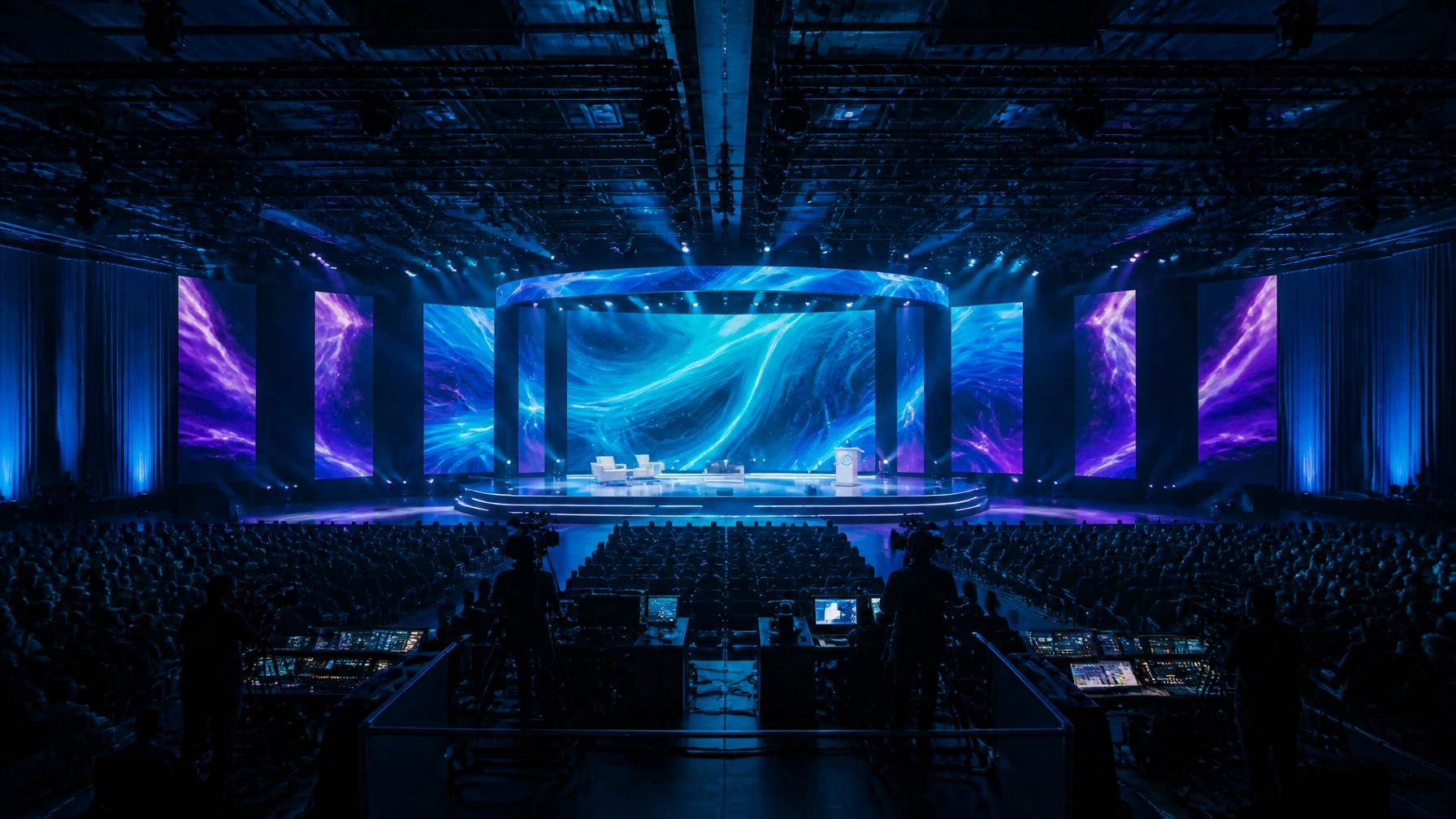
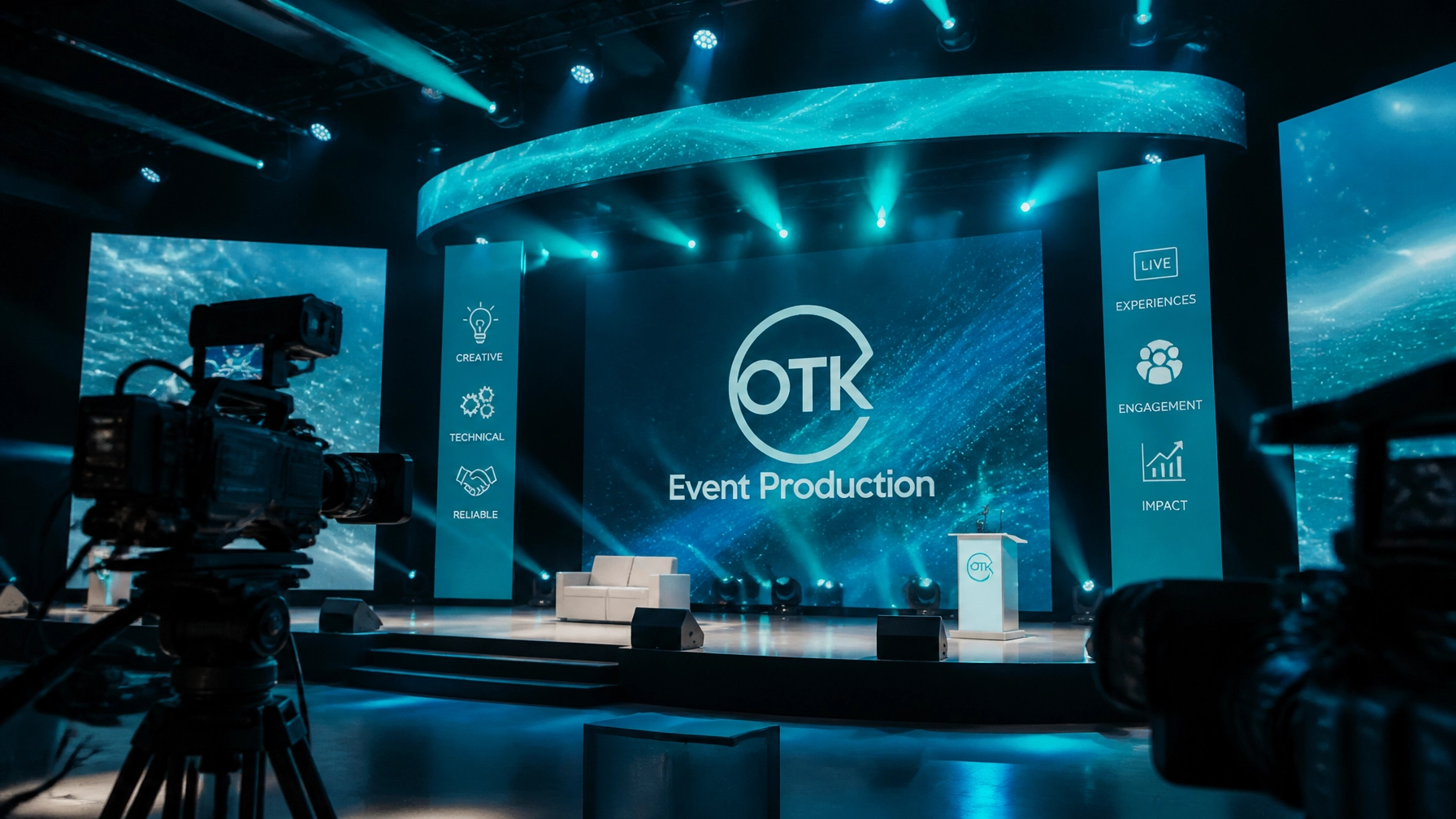
As the venue becomes a visual environment, stage design must serve both the room and the lens.
OTK’s event and A/V production services integrate staging, LED, lighting, audio, technical direction, and camera planning into one production system. This approach prevents common capture problems such as unreadable screens, flat lighting, blocked sightlines, or backgrounds that compete with the speaker.
A content-ready stage considers:
- Camera sightlines from the front, rear, and side positions
- Speaker lighting that remains consistent across wide and close-up shots
- LED content designed for readability on mobile screens
- Branded surfaces that appear naturally in footage
- Clean areas for sponsor visibility and interviews
- Audience sightlines that preserve the live experience
- Safe, discreet cable paths and technical positions
Lighting design is especially important. Dramatic lighting can create a powerful in-room atmosphere, but excessive contrast can make faces disappear on camera. OTK’s technical team balances audience impact with broadcast exposure, ensuring that the visual language works in the venue, on the livestream, and in the final edit.
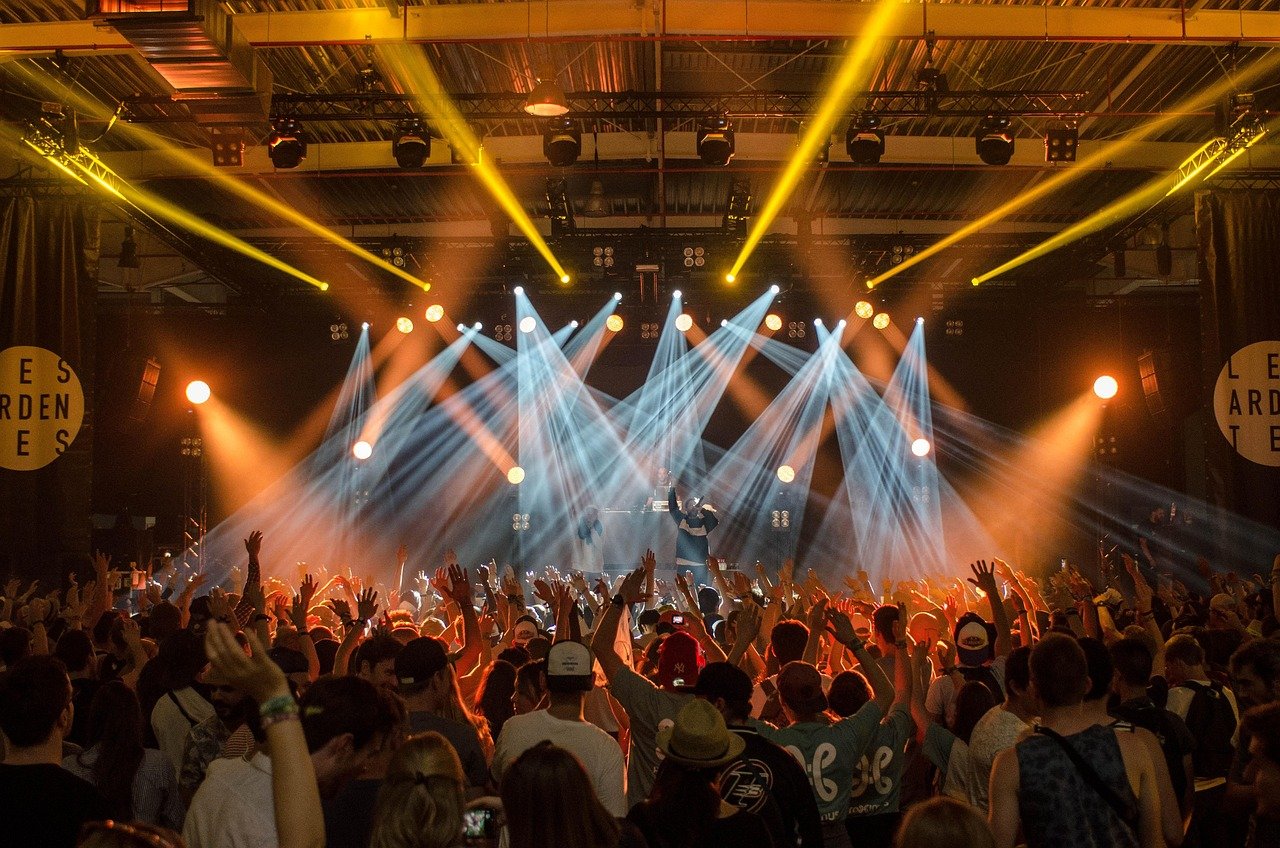
For festivals and high-energy shows, staging, special FX, and dynamic lighting can create the visual punctuation needed for a sizzle reel. For universities, corporate meetings, and non-profit events, a more controlled design may better support speaker clarity and sponsor storytelling.

The strongest event environments are designed to be experienced live and remembered on screen.
Build the Multi-Camera Workflow: Capture More Than the Program Feed
A single locked-off camera can document an event. A multi-camera workflow can tell its story.
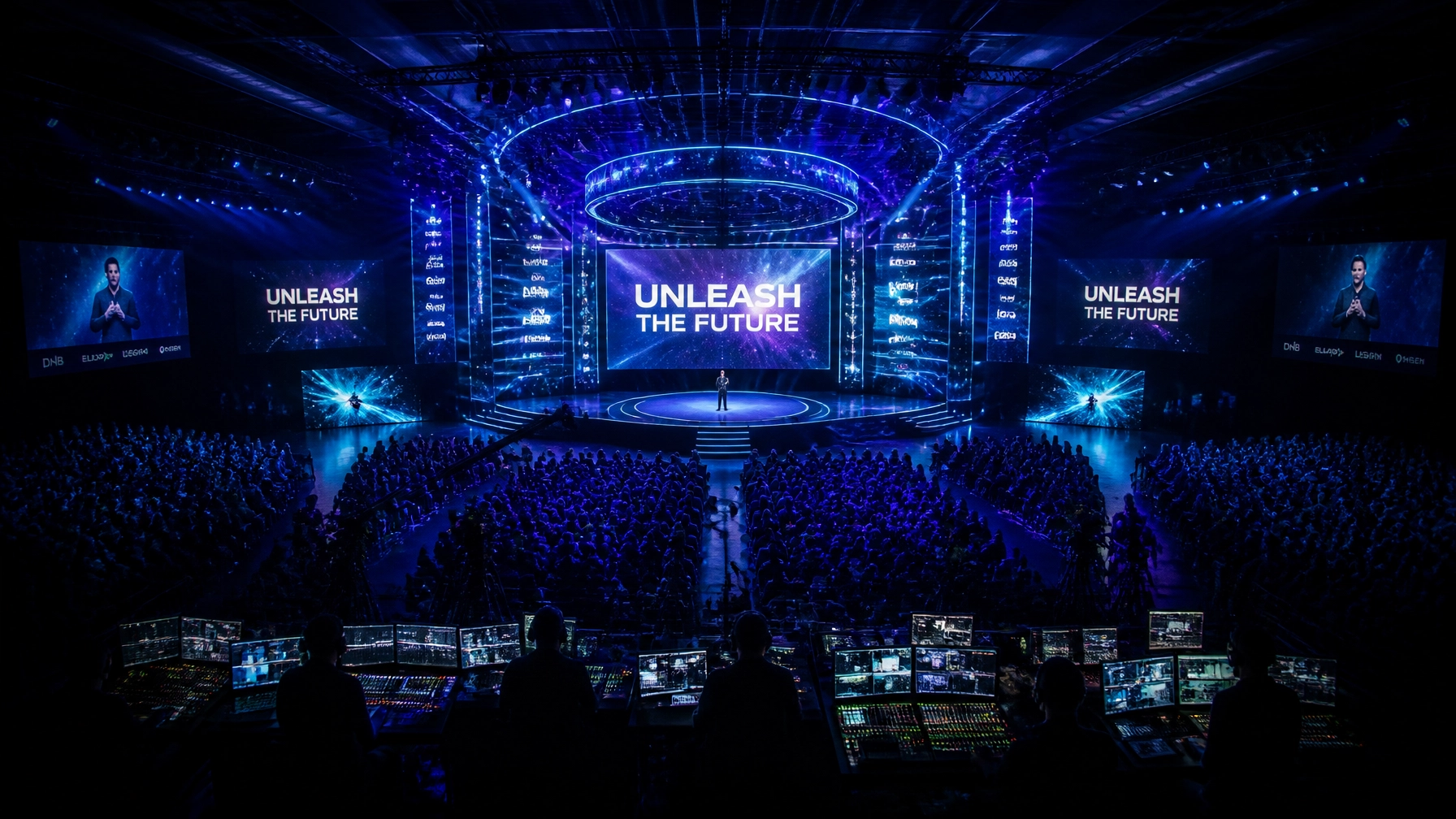
For livestreaming services for events, OTK can coordinate camera operation, switching, graphics, audio integration, recording, and platform delivery. A typical setup may include:
- Wide master camera: Establishes the room, stage, audience, and overall scale.
- Primary speaker camera: Captures clean, composed close-ups and medium shots.
- Reaction camera: Records audience engagement, applause, emotion, and participation.
- Stage or roaming camera: Adds movement, detail, and energy for social edits.
- Sponsor and activation camera: Captures branded environments, products, booths, and interactions.
- ISO recording: Preserves individual camera feeds for more creative flexibility after the event.
During the show, the technical director switches the live program feed for the in-room screens or livestream. At the same time, ISO feeds can be recorded for post-production. That distinction matters: the best live angle is not always the best editing angle.
A clean audio workflow is equally essential. The production team can route microphones, playback, music, and room ambience into a controlled mix for the livestream and post-event edits. In a hybrid event production environment, remote viewers should hear the speaker clearly without losing the energy of the room.

The program feed serves the moment; isolated camera and audio feeds extend its value.
Shoot for the Deliverable: Social, Sizzle, and Sponsor Content Need Different Coverage
Not every asset should be captured the same way. A 15-second social clip, a 90-second sizzle reel, and a sponsor recap each require a different editorial plan.
For social content
The content team prioritizes fast, clear, emotionally immediate moments:
- Strong opening lines from speakers
- Audience reactions and participation
- Behind-the-scenes preparation
- Short testimonials
- Product moments and visual reveals
- Walk-ons, performances, and special FX
- Vertical-friendly framing and clean backgrounds
Social clips should communicate context quickly. A captioned quote with a strong first sentence can often travel further than a technically perfect but slow excerpt.
For sizzle reels
A sizzle reel needs a narrative arc:
- Anticipation and venue preparation
- Doors opening and audience arrival
- Show development and stage details
- Speaker, performer, or leadership moments
- Crowd energy and interaction
- Sponsor visibility
- Closing emotion or call to action
OTK’s creative direction team can shape the event around a clear visual story, while the capture team gathers the footage needed to build momentum from the first frame to the final logo.
For sponsor deliverables
Sponsor content should be planned with precision, not inserted as an afterthought. Coverage may include:
- Branded stage moments
- Sponsor mentions and lower thirds
- Booth or activation footage
- Product interactions
- Attendee engagement
- Logo-safe stills
- Dedicated 15- to 60-second edits
This structure helps protect sponsor value while maintaining an authentic event narrative.
Every deliverable has its own language; effective capture speaks all of them.
Use a 90-Day Delivery Timeline: Turn One Show Into a Content Campaign
As soon as the event concludes, the post-production workflow should already be in motion.
Day 0–1: Immediate momentum
Within the first 24 hours, the priority is speed and relevance.
Typical deliverables include:
- Livestream replay or recording link
- Three to ten fast-turn social clips
- Opening-day photos or still selects
- Short attendee or speaker quotes
- Behind-the-scenes posts
- Sponsor thank-you content
The team backs up media, organizes files, identifies key timecodes, and cuts initial clips from the program feed. These assets support same-day recap posts and keep the event visible while attention is still high.
Days 2–7: The first content wave
During the next week, the production team can deliver:
- Ten to 30 vertical clips
- One or two highlight compilations
- Speaker quote edits
- LinkedIn-ready thought leadership clips
- YouTube thumbnails and replay graphics
- Initial sponsor edits
- Captioned and subtitled versions
This stage transforms event energy into a repeatable social publishing schedule.
Weeks 2–4: The flagship story
The main sizzle reel typically takes shape during this window. Using program footage, ISO recordings, interviews, crowd reactions, graphics, music, and motion design, the edit can become a 60- to 120-second campaign asset.
Where useful, the team creates:
- Horizontal master
- Vertical social cut
- Square or platform-specific version
- Speaker-focused recap
- Sponsor-integrated version
- Internal culture or recruitment edit
Weeks 5–8: Long-form and educational content
For conferences, university programs, leadership summits, and corporate meetings, the recorded event can become an on-demand library.
Potential assets include:
- Full session recordings
- Individual speaker edits
- Topic-based chapters
- Training excerpts
- Podcast-style conversations
- Internal town hall segments
- Alumni, donor, or stakeholder communications
This is where professional technical event management delivers long-term value. Clean recordings, accurate graphics, organized files, and reliable audio make future repurposing faster and more cost-effective.
Weeks 9–12: The evergreen content layer
The final stage uses the content library for sustained marketing:
- Throwback posts
- Speaker quote campaigns
- Sponsor case studies
- Recruitment content
- Event registration promotions
- Paid social cutdowns
- Website and email media
- Teaser content for the next event
One live show can now support an entire quarter of communication without repeating the same asset.
The 90-day content runway turns event spend into an ongoing growth platform.
Choose One Production Partner: Align the Live Experience With the Afterlife
When creative direction, staging, lighting, livestreaming, technical management, and content capture are split across disconnected vendors, important details can fall through the gaps.
OTK’s company process is built around thinking, collaborating, designing, producing, and executing as one connected workflow. That model helps the team make practical decisions early: where a camera should go, how a sponsor should appear, which moments deserve a dedicated cue, and how the final footage will be distributed.
Whether the client is a corporate brand launching a product, a university hosting a high-stakes summit, a non-profit mobilizing supporters, or a festival promoter creating a must-attend experience, the objective remains consistent: create a live event that performs beyond the room.
OTK Event Production provides turnkey support across show development, creative direction, lighting design, technical management, staging, special FX, livestreaming, and post-event content capture.
The show may last one day. With the right workflow, its influence can shape the next 90.
Event Content Capture Checklist: The OTK Workflow at a Glance
Before the event:
- Define audiences, platforms, and content goals
- Build the shot list and run of show
- Confirm sponsor and usage requirements
- Design the stage and lighting for camera
- Plan multi-camera, audio, livestream, and ISO recording
- Prepare graphics, captions, lower thirds, and templates
During the event:
- Capture the live program and individual camera feeds
- Monitor audio, lighting, exposure, and framing
- Mark priority timecodes
- Record speaker, audience, sponsor, and backstage moments
- Deliver live or near-live social content where required
After the event:
- Back up and organize every media source
- Deliver immediate clips within 24 hours
- Produce social and sponsor assets within three to seven days
- Complete sizzle and recap edits within one to two weeks
- Build long-form and evergreen content for the following 90 days
For organizations ready to make every event more measurable, resilient, and useful, contact OTK Event Production to build an event content capture plan before the first light goes up.